| Issue · October 2026 |
Learning Journey |
InTouch
Stay Informed. Stay Inspired. Stay In Touch.
|
 |
THIS MONTH'S IDEA · NOTICE |
| October invites us to NOTICE. As classroom routines settle and we get to know our learners, we begin to recognize patterns, strengths, questions, and sometimes surprises. Some of what we notice comes through formal assessment. Much of it emerges through everyday interactions, classroom experiences, and relationships. The challenge isn't simply to gather information, but to consider the story beside the story. What are we seeing, what might be shaping it, and what might we still need to understand? When we approach what we notice with curiosity, we leave room for different explanations and possibilities. A learner's assessment results, participation, behaviour, or classroom work may tell us something important, but rarely tell us everything. Noticing is the beginning of understanding, not the end of it. | Thinkpoint What am I noticing about my learners, and what might I be missing? Think about a learner who has caught your attention recently. What have you noticed, what are you beginning to understand, and what else might help you see the bigger picture? | One Thing to Try Look for the story beside the story. As screening results, classroom observations, and other evidence begin to come together, consider what you're noticing and how that information might guide your next steps. For Teachers Choose one learner and consider: What am I noticing?Look for patterns across assessment results, classroom work, and everyday observations. What else might help me understand?Consider the learner’s strengths, language, experiences, and opportunities to learn. What might I try next?Identify one skill to explore further, an instructional adjustment to make, or a way to monitor progress. For School & System Leaders Consider what you're noticing across classrooms or schools: What patterns are emerging?Look across assessment information, educator observations, and conversations. What else do we need to understand?Consider differences in classroom contexts, available resources, and educator experiences. What might help?Identify one opportunity to strengthen instructional support, create space for collaborative problem-solving, or remove a barrier. The goal isn't to collect more information for its own sake. It's to bring together what we know, what we're noticing, and what we're still learning to make purposeful decisions. | |
One Thing From Us
| What to Do With the Data? Screening results can raise important questions about what a learner needs next. But knowing that a student is experiencing difficulty is different from understanding which skills may need closer attention. Our What to Do With the Data? resource offers a starting point for looking more closely at reading results. By considering accuracy, fluency, decoding, and foundational reading skills, educators can identify where additional information may be helpful and which areas of instruction might need attention. It's one way to move from noticing a result to asking a more focused question about learning. | 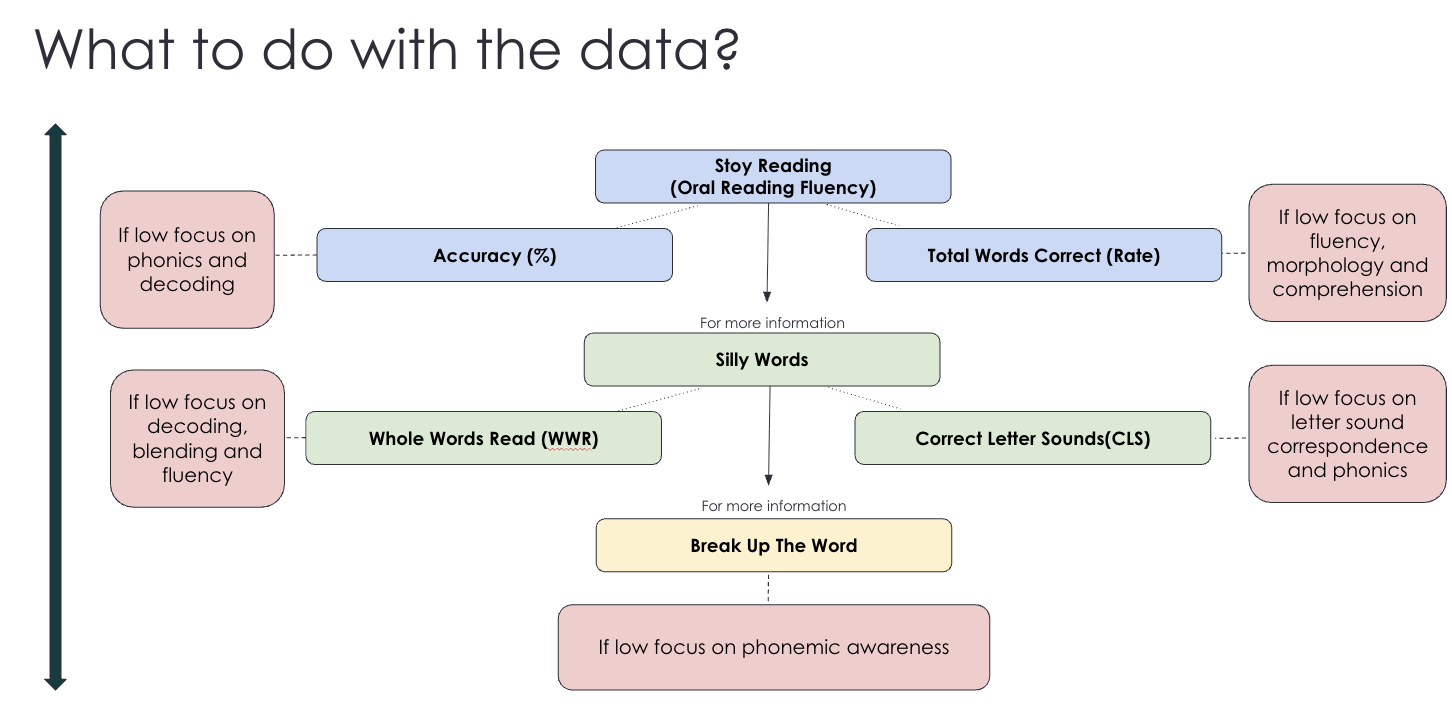 | Assessment gives us information, not instructions. Screening results are a starting point. Classroom observations, student work, learner strengths, and context all contribute to understanding what the information means. | In Focus Academic Assessment: Understanding the Learner and the Context Reading screening is one important way of noticing. In Ontario, early reading screening is required in Kindergarten through Grade 2, providing educators with information that can help identify learners who may need additional support. Across other jurisdictions, assessment practices and requirements vary, but the need to understand and respond to student learning remains. Assessment provides valuable information, but the context in which learning is assessed matters too. How familiar is the content to the learner? Can they connect with the experiences, language, or situations presented? How might these factors influence their ability to demonstrate what they know and can do? At Learn Different, this thinking guides our work with communities to develop culturally relevant reading assessment passages. Drawing on local knowledge, experiences, and perspectives, we create passages that reflect the cultures and contexts of learners while maintaining a focus on the reading skills being assessed. This same attention to context is important when interpreting results, identifying instructional priorities, and developing individualized learning goals. Assessment information, classroom evidence, and educator knowledge all contribute to decisions about what comes next. If this is an area of interest in your school or community, we're happy to share sample assessment materials and continue the conversation. Reach us at info@learndifferent.org. Email info@learndifferent.org | Ask Us What questions are coming up as you interpret assessment information or plan next steps for learners? Perhaps you're wondering how to interpret a screening result, identify which reading skills need closer attention, develop a meaningful learning goal, or decide what to assess next. We'd love to hear the questions you're working through. Your experiences and perspectives help shape the conversations, resources, and supports we develop alongside our partners. Email askus@learndifferent.org | Keeping in Touch October is a busy time in schools. Screening windows are open in many communities, educators are reviewing student progress, and individualized learning plans and reporting are underway in some systems. We're continuing to work alongside educators as they deepen their understanding of literacy development and connect assessment information to instructional decisions. Through Connected North, we're offering sessions that explore the science of reading in greater depth, including foundational skills such as phonics and fluency. These conversations provide opportunities to connect research with classroom practice and consider how a stronger understanding of reading development can inform instruction. | Stay InTouch Where We’ll Be October 2026 ERDI Fall Conference | October 12–18 | Jasper, Alberta researchED Toronto | October 24 | Toronto, Ontario Looking Ahead to November Indspire National Gathering | November 18–20 | Winnipeg, Manitoba If you're attending any of these events, we'd love to connect! Connecting With Us At Learn Different, we believe meaningful change begins with relationships, curiosity, and a willingness to learn together. Our work brings research, local knowledge, educator expertise, and learner experiences into conversation, recognizing that effective practices must also make sense within the communities and classrooms where they are used. learndifferent.org
info@learndifferent.org
askus@learndifferent.org
One Last Thought Understanding grows when we bring together what we notice, what we know, and what we wonder. | |
Know someone who would enjoy InTouch?
Forward this to a colleague or sign up to get InTouch in your own inbox each month.
|
InTouch · Ideas, tools and connection from Learn Different.
310-726 Bloor St. West, Toronto, ON, M6G 1L4 |
| |
|
|